
Our Philosophy
An introduction to Amphora.
The Oldest Way of Learning, Reinvented.
Stories have always helped us understand the world.
Long before textbooks, classrooms, and digital learning tools, people shared knowledge through stories. They used them to explain nature, pass down history, explore big questions, and make sense of the world around them.
At Amphora, we believe this timeless way of learning deserves a place in modern education.
We bring the power of storytelling to everyday learning — helping families and classrooms explore new ideas, understand the world, and follow their curiosity wherever it leads.
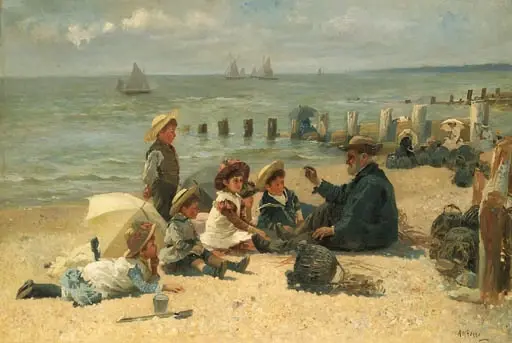
A Summer's Tale, Alexander Mark Rossi
Why Stories Make a Difference
Learning about the world is one thing. Understanding how it works is another.
Imagine exploring ancient Athens with your child. They learn that democracy took shape in ancient Greece. It's an important fact, but how can you help them understand why it mattered — and what it meant for the people who lived it?
Now imagine bringing this world to life through a story. Your child follows a young Athenian citizen as he listens to heated debates in the assembly, weighs different arguments, and casts his vote on a decision that will shape his city. Later, he scratches a citizen's name onto a piece of broken pottery as part of a vote to decide who must leave Athens.
Through his eyes, your child can begin to picture democracy not
simply as an idea from a history book, but as something people practiced, debated, and shaped together.
Through these imagined experiences, brought to life by a story, children can begin to build mental models of how the world works— how people make decisions, how ideas shape institutions, and how individual choices can affect an entire community.
This is what stories can bring to learning: the connections that turn information into understanding.
A story gives facts a context. It reveals causes and consequences, brings abstract ideas closer to everyday experience, and helps children see how individual pieces fit into a bigger picture.
And when knowledge comes with a question worth exploring, learning can become more than remembering an answer. It can spark curiosity — encouraging children to ask why, imagine what might happen next, and discover connections of their own.
Stories don't replace facts, explanations, or hands-on exploration. They help give those things meaning, offering children a compelling place to begin and a reason to keep learning.

Athens, the cradle of democracy, photo courtesy of Constantinos Kollias
Making Storytelling Part of Everyday Learning
We created Amphora around a simple idea: bringing storytelling into learning should be easier.
Parents want to nurture their children's curiosity and help them discover the world. Teachers look for meaningful ways to engage students and connect what they learn to the world around them.
But finding the right stories — or creating them from scratch — takes time.
Amphora makes educational storytelling easier to access. Our library brings together narrated stories across subjects, from history and science to the natural world and beyond.
Instead of starting with a blank page, families and educators can begin with a story and build from there.
Because storytelling should not be something reserved for special occasions. It can be part of everyday learning.

"Discovery", photo courtesy of Mi Pham
Every Great Discovery Begins Somewhere.
Sometimes, it begins with a question.
Sometimes, with a surprising fact or an idea we've never considered before.
And sometimes, it begins with a story.
At Amphora, we want to help more children discover the ideas, people, and wonders that make our world worth understanding — one story at a time.
The oldest way of learning, reinvented for the next generation.